Download Xiaomi Redmi Note 3 Special Edition Firmware (kate): Fix System Lag & Battery Drain
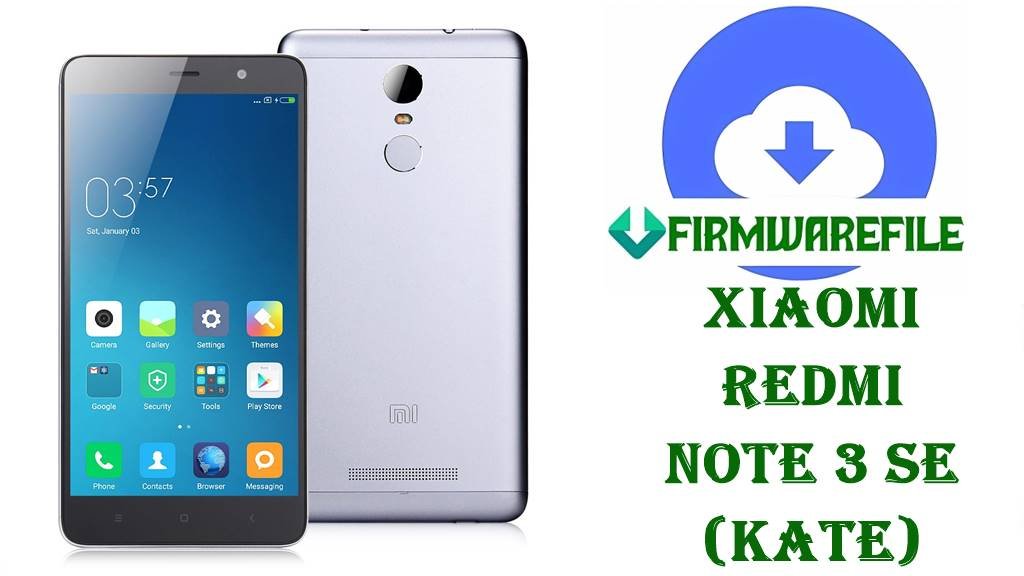
This guide provides the complete firmware collection for the Xiaomi Redmi Note 3 Special Edition (kate). If you’re experiencing system lag, battery drain, or a bricked device, our verified download links and detailed flashing instructions will help you restore your phone’s functionality. The Redmi Note 3 Special Edition, featuring a Snapdragon 650 chipset and a 5.5-inch FHD display, is a variant of the Redmi Note 3 designed for specific markets (e.g., Hong Kong, Taiwan) with a 4050mAh battery. Software issues can affect its performance, and this guide will help you resolve them. Note: This article is for the kate codename (Redmi Note 3 Special Edition), not to be confused with the standard Redmi Note 3 (kenzo) or other Redmi models like Redmi Note 4X (mido).
⚠️ Essential Pre-Flash Checklist
Flashing can lead to errors if not done correctly. Complete this checklist to ensure a smooth process. All data will be wiped, so a backup is critical.
- ✅ Full Data Backup: Save photos, contacts, and files to Mi Cloud, Google Drive, or a PC to prevent data loss.
- ✅ Charged Battery: Ensure your Redmi Note 3 Special Edition has at least 60% battery to avoid interruptions during flashing.
- ✅ Windows PC: The Mi Flash Tool requires a Windows operating system.
- ✅ Original USB Cable: Use a high-quality USB cable for a stable connection to your PC.
- ✅ Unlocked Bootloader: Flashing requires an unlocked bootloader. Use the official Mi Unlock Tool (expect a 7-15 day waiting period).
- ✅ Required Software: Install the latest Mi Flash Tool and Xiaomi USB Drivers.
Understanding the Firmware: Types and Regions
Selecting the correct firmware is crucial to avoid bricking your Redmi Note 3 Special Edition (kate). The kate variant is specific to the Redmi Note 3 Special Edition with the Snapdragon 650 processor, distinct from the standard Redmi Note 3 (kenzo, also Snapdragon 650 but with different modem/firmware configurations).
- Fastboot ROM (.tgz): A full factory image for Mi Flash Tool, ideal for unbricking or reverting to stock MIUI.
- Recovery ROM (.zip): Used with custom recoveries like TWRP for installing custom ROMs like Xiaomi.eu.
- Region Codes:
- MIXM: Global version with Google services and multi-language support, tailored for markets like Hong Kong and Taiwan.
- EUXM: Xiaomi.eu version, a debloated MIUI ROM with Google services and multi-language support.
Note: No China ROM (CNXM) was provided, as the kate variant was primarily released for global markets.
Official Firmware Downloads for Redmi Note 3 Special Edition (kate)
These firmware files are sourced from Xiaomi’s official servers or trusted repositories for reliability and security. Ensure you download ROMs for the kate codename, not kenzo, to avoid compatibility issues.
| Region | MIUI Version | Android | Release Date | Download Link |
|---|---|---|---|---|
| Global (MIXM) | V10.2.1.0.MHRMIXM | 6.0 | 2019-01-14 | Fastboot ROM |
| EU (EUXM) | V10.2.1.0.MHRMIXM | 6.0 | Unknown | Recovery ROM |
TWRP Recovery for Redmi Note 3 Special Edition (kate)
To flash custom ROMs or perform advanced tasks, install the TWRP custom recovery specific to the Redmi Note 3 Special Edition (kate).
- TWRP Recovery: Check TWRP’s official site or XDA Forums for the latest TWRP image for kate. A specific TWRP link for kate was not provided, but ensure you use a kate-specific recovery (not kenzo) to avoid bricking. For kenzo TWRP, see TWRP’s kenzo page and verify compatibility.
How to Install TWRP:
- Download a TWRP .img file for kate from XDA or TWRP’s site and rename it to
recovery.img. - Boot your Redmi Note 3 Special Edition into Fastboot mode (Volume Down + Power).
- Connect to your PC and open a command prompt.
- Flash TWRP by running:
fastboot flash recovery recovery.img. - Boot into recovery:
fastboot boot recovery.img.
Warning: Do not use a TWRP image for other devices (e.g., kenzo or mido), as it will brick your kate device. Verify the TWRP version is kate-specific, as kate and kenzo have different modem configurations.
Recommended Custom ROMs
For users dealing with bloatware or seeking a smoother experience, the Xiaomi.eu ROM leverages the Redmi Note 3 Special Edition’s Snapdragon 650 for a refined MIUI experience. Custom ROM support for kate is strong, similar to kenzo, due to the shared Snapdragon 650 chipset.
- Xiaomi.eu ROM: V10.2.1.0.MHRMIXM Based on Android 6.0 – Offers a lightweight, optimized MIUI experience with Google services.
- LineageOS: Check LineageOS or XDA Forums for builds like LineageOS 16.0 (Android 9.0) or 17.1 (Android 10), often compatible with both kate and kenzo due to similar hardware.
- Pixel Experience: Check Pixel Experience or XDA for builds like Pixel Experience 10 (Android 10), offering a Google Pixel-like interface with enhanced features.
How to Flash: Step-by-Step Instructions
Choose the flashing method based on your firmware type: Fastboot for official .tgz files or Recovery for custom .zip files.
Method 1: The Fastboot Method (Official Stock ROMs)
- Unzip the Firmware: Extract the .tgz file using 7-Zip to obtain a folder with an “images” subfolder and flash scripts.
- Launch Mi Flash Tool: Open the Mi Flash Tool with administrator privileges on your Windows PC.
- Enter Fastboot Mode: Power off your Redmi Note 3 Special Edition, then press and hold Volume Down + Power until the Fastboot logo appears.
- Connect to PC: Plug your phone into your PC using the USB cable.
- Load Firmware: In Mi Flash Tool, click “select” and choose the extracted firmware folder. Click “refresh” to detect your device.
- Choose Flash Option: Select “clean all” for a complete reset (recommended for stability). Avoid “clean all and lock” unless you’re certain of the ROM’s region compatibility.
- Start Flashing: Click “flash” and wait 5-10 minutes. Do not disconnect the phone.
Troubleshooting Tip: If Mi Flash Tool fails to detect your Redmi Note 3 Special Edition, try reinstalling the Xiaomi USB Drivers or switching to a USB 2.0 port for better connectivity.
Method 2: The Recovery Method (Custom ROMs)
- Install TWRP: Ensure TWRP is installed using a kate-specific image from TWRP’s official site or XDA Forums.
- Transfer ROM: Copy the .zip ROM file (e.g., Xiaomi.eu) to your phone’s internal storage or an SD card.
- Boot into Recovery: Power off your phone, then press Volume Up + Power until the TWRP logo appears.
- Wipe Data: In TWRP, go to “Wipe” > “Advanced Wipe” and select Dalvik/ART Cache, Cache, and Data. Swipe to confirm.
- Install ROM: Return to the main menu, tap “Install,” select the .zip file, and swipe to flash.
- Reboot: Reboot to system after installation completes.
After the Flash: First Boot and Setup
The first boot after flashing may take 10-15 minutes as the system initializes. Don’t interrupt if it seems stuck on the Redmi logo. Once booted, follow the setup wizard and restore your data from your backup.
Frequently Asked Questions (FAQs) for the Redmi Note 3 Special Edition (kate)
- Q1: Why does my Redmi Note 3 Special Edition experience system lag? A: System lag can result from bloatware or heavy apps taxing the Snapdragon 650. Flashing the latest Global ROM (V10.2.1.0) or a custom ROM like LineageOS 16.0 can improve responsiveness.
- Q2: How can I fix battery drain on my Redmi Note 3 Special Edition? A: Battery drain may stem from background processes or outdated firmware on the 4050mAh battery. Flashing a clean stock ROM or a debloated ROM like Xiaomi.eu or Pixel Experience can optimize power efficiency.
- Q3: Will the Redmi Note 3 Special Edition receive Android 7 or newer? A: The kate variant is officially capped at Android 6.0 with MIUI 10. For Android 7.0 or newer, consider custom ROMs like LineageOS 16.0 (Android 9.0) or 17.1 (Android 10), available on XDA, which leverage the Snapdragon 650 for smooth performance.
- Q4: I flashed a ROM for kenzo or mido on my kate device and it’s bricked. What do I do? A: If your device is in EDL mode (Qualcomm HS-USB QDLoader 9008), use Mi Flash Tool with the correct kate Fastboot ROM (e.g., V10.2.1.0.MHRMIXM). Select “clean all” to restore the device. Seek help on XDA Forums if issues persist.